|
|
School of Electrical Engineering | Department of Communications and Networking | Research Group for Protocols, Services, and Software |
| Current Notes | Research Group | Research Interests | Theses | Projects | Student Projects | Teaching | Publications | Contact |
|---|
|
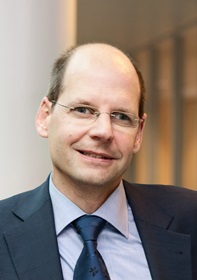
Jörg Ott Jörg Ott is Professor for Networking Technology with a focus on Protocols, Services, and Software in the Department of Communications and Networking in the School of Electrical Engineering at Aalto University. From 1997 through early 2005, he was Assistant Professor in the Computer Networks group at the Universität Bremen and member of the Center for Computing Technologies (TZI). From 1992 through 1997 he worked as a research staff member with teaching responsibilities at TU Berlin. He received his Doctor in Engineering (Dr.-Ing.) in 1997 from Technische Universität Berlin. His research interests are in network architectures, protocol design, and networked systems, from modeling to implementation. His current research focus areas include communication in challenged networks, particularly delay-tolerant/mobile opportunistic networking; adaptive real-time communication, information-centric networking, and network measurements. He is co-chair of the DTN Research Group in the IRTF. In the IETF, was co-chair of the MMUSIC working group from 1997 through 2009 and co-chaired the SIP working group from its foundation in 1999 to October 2002. Jörg co-founded Tellique Kommunikationstechnik GmbH (1998), which provided solutions for IP multicast-based content distribution and performance enhancements for satellite and other challenged networks; Lysatiq GmbH (2007), which provided solutions for disconnection tolerance and performance optimizations for challenged networks and mobile Internet access; Spacetime Networks Oy (2013), which provides software solutions for enabling networking (not just) in challenging industrial environments; and NeMu ("Networked Multimedia") Dialogue Systems Oy (also: callstats.io), which provides QoS and QoE monitoring and analysis for (interactive) (WebRTC-based) multimedia services. |
My new home page at TUM is here.
Switching jobs: I will leave my Full Professor position at Aalto University effective 1 August 2015 to take up the BMW-endowed Chair on Connected Mobility at Technische Universität München. I will remain affiliated with Aalto University as an Adjunct Professor.
Next days in the office: 27, 28, 29 July, 28 August 2015.
PhD Defense: Varun Singh defended his PhD thesis on 2 June 2015, with Prof. Michael Welzl (University of Oslo) as opponent.
Workshop on Do-It-Yourself Networking: an Interdisciplinary Approach: at ACM MobiSys 2015.
Our liberouter web site is now ready.
Master Theses: Note that I do no longer offer new MSc thesis and special assignment topics.
My previous home (1997-2005) was at
University of Bremen TZI.
Research Interests
I spend quite some time in Internet-related standardization, as a contributor but also as one way of keeping track of real-world problems and industry directions. I have been participating in the IETF since 1993 focusing on the areas outlined above, particularly control and transport protocols for multimedia conferencing. I was co-chair of the MMUSIC WG from 1997 through 2009 and of the SIP WG from 1999 through 2002. I am now co-chairing the Delay-tolerant Networking Research Group (DTNRG). I am presently particularly interested in real-time transport (AVT WG, RMCAT WG, and related ones), web-based multimedia conferencing (RTCweb WG), information-centric networking (ICNRG), and recently in performance metrics for the Internet.
In a former life, from 1994 through 2000, I have been active in the
Telecommunication Sector of the International Telecommunication
Union (ITU-T, formerly known as CCITT). Particular interests
included the infrastructure for data conferencing (T.120) which was
developed by Study Groups 8 and later 16 and the design of the H.323
series of Recommendations for IP-based multimedia conferencing (in
local area networks) and IP telephony which I accompanied from the
the very beginning in early 1995, first in SG15 and later in SG16.
Research Projects
| RIFE |
Feb 2015 –
Jan 2018 |
RIFE: architectuRe for an Internet For Everybody. A project funded by the EC Horizon 2020 program to provide affordable and sustainable access to the Internet by realizing an architecture for an Internet for everybody that enables access to information and services at economically sustainable price points unmatched by today's technologies while also catering to challenges, such as intermittent connectivity, posed by the varying environmental challenges that are imposed on those who want to connect. RIFE will devise a unifying network architecture, incorporating elements of delay-tolerant and information-centric networking, develop dissemination strategies to enable Internet access in diverse settings, and implement application-specific functions as necessary to support today's and future services. | SSICLOPS |
Feb 2015 –
Jan 2018 |
SSICLOPS: Scalable and Secure Architecture for Cloud Operations. A project funded under the EC Horizon 2020 program to create and operate high-performance private cloud infrastructure that allows flexible scaling through federation with other private clouds without compromising their service level and security requirements. SSICLOPS federation will support the efficient integration of clouds, no matter if they are geographically co-located or distributed, belong to the same or different administrative entities or jurisdictions. We will devise efficient and secure transport protocols for both intra- and inter-cloud/data center communication and develop mechanisms for flexible job scheduling and migration supported by cloud performance monitoring and tuning functions. We will explore four use cases from in-memory data bases high-performance computing (high-energy physics) to cloud bursting to network function virtualization. | CloSe |
Jul 2014 –
June 2016 |
CloSe: Cloud Security Services. A joint academic and industry project funded by the Academy of Finland and Tekes on provide secure access to cloud-based services and information as well as secure storage and service provisioning inside the cloud. Our focus is on privacy-preserving data access, secure data storage and deduplication, and scalable network infrastructure support. |
|---|---|---|
| METRICS |
Sep 2013 –
Aug 2017 |
METRICS: Measurement for Europe: Training and Research for Internet Communications Science. An EC FP7 Marie Curie Initial Training Networking for 13 PhD students and one post-doctoral researcher on network measurements in the fixed and mobile Internet and within data centers. Research is complemented by summer schools on scientific writing and presentations, tools and methodology, and entrepreneurship. Aalto Comnet work will focus on 1) (mobile) network measurements and QoE prediction and 2) data analysis, trace-based modeling, and simulations of human behavior. |
| PRECIOUS |
Nov 2013 –
Oct 2016 |
PRECIOUS: Preventive Care Infrastructure based on Ubiquitous Sensing: A cross-disciplinany project on behavioral monitoring through sensors and networked services and offering feedback to users on how healthy their lifestyle is. The speicfic target is food intake monitoring and fostering behavioral changes to counter obesity. The share of Aalto Comnet is in offering robust communication and data collection mechanisms using sensors and smart phones. |
| EIT ICT Labs |
Jan 2011 –
Dec 2015 |
A large European cooperation framework to foster research, education, and innovation between seven core nodes (Berlin, Eindhoven, Helsinki, Paris, Stockholm, Trento) and numerous associated partners in each country. Sub-projects, Activities, are granted on an annual basis and are intended to complement existing research funding towards the above goals, with a strong emphasis on busiess and innovation. My research group has been involved in activities on opportunistic networking, information-centric networking, software-defined networking, and (web-based) multimedia communication. |
| Leone |
Oct 2012 –
Mar 2015 |
Leone: From global measurements to local management: An EC FP7 project within the Future Internet framework in which we develop and utilize a global measurement platform that uses probes to carry out end user-based measurements of network characteristics and collects those measurements in (per-provider) database. Defined interfaces will allow ISPs to share selected information in support troubleshooting and root cause analysis, assist network management, and offer visualization of network properties. |
| PDP |
Sep 2012 –
Aug 2015 |
PDP: Picking Digital Pockets: A project funded by the Academy of Finland on exploring regional distributed search protocols and algorithms in mobile opportunistic networks, made up exclusively of mobile devices carried by human users. Human users may make information on their devices available for sharing with others, including static files (e.g., a published mobile profile), dynamically created contents (e.g., photos), dynamically retrieved contents (e.g., cached pages), and ephemeral sensed data. We will investigate how to mine such data with minimal overhead and aim at understanding how congruent searches issued by different devices will be. This project is carried out in cooperation with Jussi Kangasharju (University of Helsinki). |
| IoT SHOK |
Mar 2012 –
Dec 2015 |
IoT: Internet-of-Things is a national Finnish project funded by Tivit/Tekes, addressing different aspects for machine-to-machine communication. The projects spans all areas from lower layer technologies to application trials with strong industry involvement. Our focus is on congestion control for IoT environments and on communication in mines. |
| SCAMPI |
Oct 2010 –
Sep 2013 |
SCAMPI: Service platform for soCial Aware Mobile and Pervasive computIng: An EC FP7 project within the Future Internet framework in which we develop an environment facilitating opportunistic social networking among mobile devices without reliance on infrastructure. This specifically includes the design of a service creation architecture for mobile opportunistic networks that can deal with changing node availability and reachability. The project has a strong focus on system design and implementation which also constitute the focus area of the Comnet contribution. |
| PURSUIT |
Sep 2010 –
Feb 2013 |
PURSUIT: Publish Subscribe Internet Technologies: A project funded by the Europea Commission under the 7th Framework Programme that, as a successor of the PSIRP project, addresses transport, application layer, and operational issues of information-centric networks based upon the publish-subscribe paradigms. The focus of Comnet wil be on transport protocols for pub/sub networks and their implications on application protocol design. |
| RESMAN |
Jan 2010 –
Dec 2012 |
RESMAN: Resource Management in Delay-tolerant Mesh and Ad-hoc Networks: A project funded by the Academy of Finland that targets addressing the utilization of different (scarce) resources, especially energy, link capacity, and buffer space, in Delay-tolerant mobile networks in a coherent fashion for routing/forwarding and congestion management strategies. |
| Trilogy |
Sep 2009 –
Mar 2011 |
Trilogy: Architecting the Future Internet: An EC FP7 project within the Future Internet framework in which we specifically explore reachability between nodes via multiple paths and transport protocols to take advantage of multipath routing. My specific interest is in multipath transport for reliable and particularly for real-time communications. |
| GLASS |
Jun 2009 –
Dec 2009 |
Geo-Location Assisted Streaming Service: A project funded directly by the industry in which we investigate options for geo-awareness as input for adaptive rate control mechanisms for mobile streaming video application. |
| FI-SHOK |
Jun 2008 –
Dec 2010 |
Finnish Future Internet: A Finland-wide research project funded jointly by TEKES and industry partners in which a consortium of academic and industry partners jointly explore directions for future global internetworks. The overall research spans all layers from physical infrastructure to applications. Research combines aspects of evolutionary innovation within the architecture of the present Internet to clean-slate design ideas. My research encompasses work on transport protocols and delay-tolerant communications as well as on information (content-oriented) networking. |
| MoViE |
Jan 2008 –
Dec 2008 |
Mobile Video Enhancements: A project funded directly by the industry that investigates adaptive error and rate control for mobile video applications (conversational and streaming media). We also investigate RTP/RTCP for peer-to-peer media streaming. |
| CATDTN |
Jan 2008 –
Dec 2008 |
Connectivity, Applications, and Trials of Delay-tolerant Networking: A project funded directly by the industry in which we are developing a few trial applications for mobile users, for which we also set up a small (partly virtual, partly physical) trial network. We investigate resource management for mobile devices in conjunction with security mechanisms. |
| CHIANTI | 2008 – 2009 | Challenged Internet Access Network Technology Infrastructure: An EC FP7 project on supporting personal and vehicular mobility as well as nomadic computing incrementally in today's Internet. The base assumption is that mobility and nomadicity will lead to challenged networking conditions due to (unforeseeable) disconnections. The project develops technical solutions to support robust communications in such challenged networks with and without infrastructure assistance. |
| Multicast IPTV |
Jan 2008 –
Dec 2008 |
Adaptive Error Measurement, Concealment, and Repair for IP Streaming Video: A joint project with University of Glasgow (Colin Perkins) funded by Cisco Research on multicast-based IPTV media distribution and repair. The project addresses repair by intermediaries and peers and investigates diagnosing network characteristics from observing reception statistics across different receivers from individual and multiple media streams, for which suitable quality metrics will be derived. |
| REDI | 2007 – 2009 | Rethinking the Design of Internet Application Protocols for a Mobile Future: A project funded by a grant from Teknologiateollisuus ry on adapting and enhancing application protocol design to (a) support delay-/disconnection-tolerant operation to increase robustness and better support mobility and (b) to make application protocols aware of underlying networking characteristics so that they can take sensible decisions about their mode of operation and communication. |
| DISTANCE |
Jan 2007 – Dec 2009 |
A project funded by the Academy of Finland on generic support for application-specific functions in intermediate nodes in Delay-tolerant Networking (DTN) environments. Concrete examples include the distributed storage and retrieval of contents using hints from the application as well as opportunistic support for application-specific routing and forwarding policies. |
| SINDTN |
Jan 2007 – Dec 2007 |
Security Infrastructure for DTN: A project directly funded from industry on security for DTN applications and DTN-based forwarding in ad-hoc networks and their realization for the DTNRG protocol specifications. The project also investigates leveraging Identity-based Cryptography (IBC) and the 3G infrastructure for mobile user authentication. |
| AVoW |
May 2007 – Dec 2007 |
Adaptive Video over Wireless: A project directly funded from industry focusing on mobile video communications in heterogenous (wireless) networks. The project extends the ns-2 simulator for 3GPP specific scenarios and analyzes different options for increasing error resilience for mobile video communications. |
| DTNPREP |
Oct 2006 – Dec 2006 |
A project directly funded from industry on exploring end-user security functionality in Delay-tolerant Networking environments by building a small demonstrator for mobile devices. |
| IVIHUT |
Mar 2006 – Dec 2006 |
A project directly funded from industry that deals with Interactive VIdeo applications and researches error-resilient packet video communications with a particular focus on mixed wired-wireless environments, aspect of the implementation and system integration of video codecs, and multiparty multimedia communications. |
| VIVALDI |
Jan 2006 – Dec 2007 |
An EC FP6 project on the development and validation of (call signaling protocol-independent) QoS and admission mechanisms for enabling flexible deployment scenarios of IP telephony bi-directional satellite networks (using DVB-RCS). TKK's focus areas are in protocol analysis, QoS-enabled media stream handlng, and overall testing and validation. |
|
Drive-thru
Internet |
2003 – 2009 |
Exploiting short-lived Internet connectivity for mobile users on the road by means of connectivity islands provided by 802.11 wireless LANs as inexpensive yet powerful communications infrastructure. The research project has shown that vehicles traveling at speed of 180km/h and more can be supported with off-the-shelf equipment today — provided that appropriate Drive-thru Services are available to the mobile users that conceal the intermittent nature of connectivity from the user's general purpose applications. Ongoing research in this self-funded project investigates the use of more general concepts of Delay-tolerant Networking (DTN) to mobile ad-hoc communications. |
Information on past research projects is available from my previous homepage
These projects are students projects carried out at the Aalto Design Factory
by international students from different disciplines, with about 8–12 students
per project.
See the Product Development Project web site for an
overview.
| Low-cost DIY Networking |
Sep 2014 –
May 2015 |
Providing a hardware and minimal software design to provide robust, rugged, and autonomously operating liberouter (see below) system. The design focuses on energy harvesting and energy management with suitable enclosures for different environments (floating in water, put up in a tree or on a mast) from inexpensive off-the-sehlf components. The system will run the liberouter platform and offer applications for the target environment on top. |
|---|---|---|
| Liberouter |
Sep 2012 –
May 2013 |
Designing devices for censorship-resistant communication using local range wireless communication. We are building autonomous routers using the Raspberry Pi platform and complement those by endpoints, e.g., using Android-based mobile devices. We design software systems for (mobile) opportunistic communication using the SCAMPI router as one basis and the Delay-tolerant Networking Research Group protocols for interoperable data exchange. |
| Grid-App |
Sep 2010 –
May 2011 |
Developing and prototyping applications for mobile opportunistic communication. We worked with designers and carried out user studies to understand which mobile opportunistic applications could be of interest to the target group of students. The project created application designs and implemented a prototype for the Android mobile OS using infrastructure-assisted mobile-to-mobile networking. |
| Spring term |
|---|
|
3rd+4th period
S-38.3159 |
Protocol Design | This course will review architectural and protocol design principles from theory as well as from practical experience over the past decades. We will discuss building blocks and (design) patterns for protocols and assess their applicability and their limitations. We will validate how the various design principles fit with and how they impact recent and foreseeable future developments in communications and (inter)networking at large and discuss how such principles may be to be restated or adapted for new environments. While a clear focus is on architectures and principles from the Internet and for internetworking we will also consider lessons from other networking technologies. |
|---|---|---|
|
3rd period
S-38.3455 |
Postgraduate seminar on Challenged Networks | This seminar addresses communications in environments with unusual caracteristics, i.e. properties that traditional design of communication protocols has not taken into account. Such "challenged networks" may exhibit, e.g., long communication delays, unpredictable link availability, and may not even provide an end-to-end path at all. Sparse sensor networks, interplanetary communications, and networks employing physical information carriage belong to this category, but so does mobile communication in the Internet. We will investigate novel networking architectures dealing with such specific environments and address issues of routing, reliability, security, and application protocols and services. We will pay particular attention to the DTN architecture developed in the DTNRG of the Internet Research Task Force. Sources for the seminar will primarily come from conferences and dedicated workshops on this subject area. The course Delay-tolerant Networking (S-38.3151) is not strictly a prerequisite, but provides the necessary background. |
| Fall term |
|---|
|
1st + 2nd period
S-38.3152 |
Network Multimedia Protocols and Services (NMPS) | Starting with a review of the basics of IP-based multimedia communications, we will explore the details of real-time media transport (RTP). Will will cover media descriptions, stream configuration, and their distribution via annoucements (SAP, SDP) and Internet Media Guides (IMG). One focus will be media streaming int he Internet: interactively via the Real-Time Streaming Protocol (RTSP), via various types of broadcast media for IPTV services, and as peer-to-peer overlays. The other focus will be the Session Initiation Protocol (SIP) as defined in RFC 3261. We will discuss concepts, protocol details, numerous extensions, and SIP's service creation architecture. Specific application scenarios to be discussed include telephony as well as instant messaging and personal presence. We will also address security and NAT/firewalls traversal. Finally, system design aspects (for endpoints as well as for infrastructures) will be investigated. Lectures will be complemented by two or three coding assignments. |
|---|---|---|
|
1st period
S-38.3151 |
Delay-tolerant Networking (DTN) | This lecture addresses communications in environments with large communication delay and/or high likelihood for disruptions. Examples include sparse sensor and mobile ad-hoc networks, networks with intermittent connectivity or disconnections, deep-space and underwater communications, and communication in environment without communication infrastructure such as remote areas, developing regions, or disaster areas. Delays and link availability in such "challenged networking environments" may be unpredictable, storage, energy, or very constrained link capacities may prevail, and and an "instant" end-to-end path between peers may not be available at all. Communication may also involve physical carriage of data (e.g., stored on a USB stick or a hard drive) over short or long distances. We will investigate novel networking architectures dealing with such specific environments and address the specific challenges arising from such environment for routing, reliability, security, and application protocols and services. We will pay particular attention to the DTN architecture developed in the DTNRG of the Internet Research Task Force. The lecture will include theoretical and practical (configuration and coding) assignments. |
|
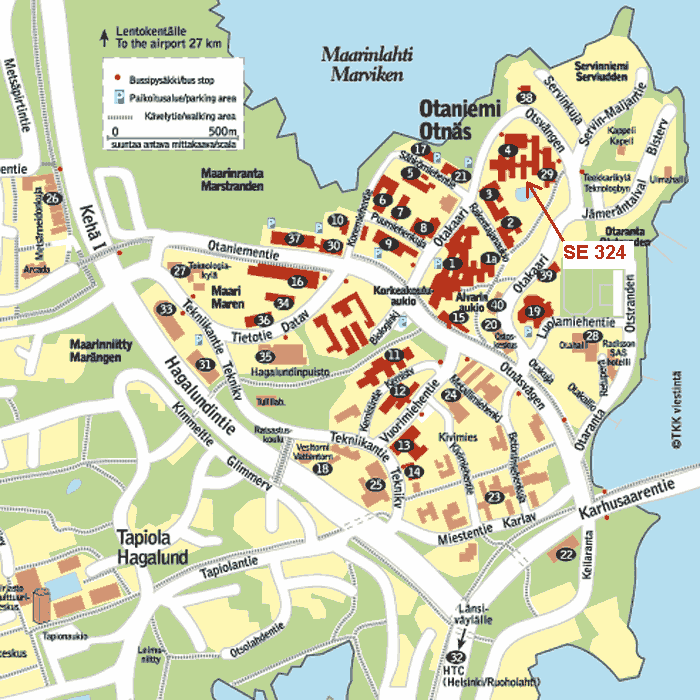
Aalto University School of Electrical Engineering Department of Communications and Networking (Comnet) Otakaari 5A FIN-02150 Espoo Finland |
office: SE 324 (reception: Wed 10–12) tel: +358 9 470-22460 tel: +358 9 470-22461 (secr.) fax: +358 9 470-22474 sip:joergott@iptel.org mailto:jo@netlab.tkk.fi |
|